
Price:
(as of $1,212.80 – Details)

Gaming PC Desktop Computer Review: Core i7 Power Meets Radeon RX 580 Performance
In an era where gaming PCs range from ultra-budget builds to wallet-shattering custom rigs, finding a balanced prebuilt system that delivers reliable 1080p gaming performance without astronomical costs is a common challenge. The Gaming PC Desktop Computer (Core I7 up to 3.9 GHz, Radeon RX 580 8G, 16G RAM, 512G SSD) positions itself as a contender in this midrange segment, blending a formidable Intel processor with AMD graphics and modern conveniences like WiFi 6 and RGB lighting. Let’s dissect its specifications, performance potential, and ideal use cases to determine whether this desktop earns a spot on your battlestation.
First Impressions: A Balanced Spec Sheet
At first glance, the hardware configuration of this PC suggests a machine built for multitasking and smooth 1080p gaming. The inclusion of an Intel Core i7 processor (clocking up to 3.9 GHz) signals strong single-core performance, which is critical for gaming and productivity workloads. Paired with AMD’s Radeon RX 580 8G—a stalwart in 1080p gaming—this system avoids the common pitfall of pairing a powerful CPU with an underpowered GPU. The 16GB of RAM and 512GB SSD round out the foundation, promising quick boot times, responsive application loading, and ample memory for modern games.
Core Components Breakdown
1. Intel Core i7 Processor (Up to 3.9 GHz Turbo)
While the exact generation of the Core i7 isn’t specified, its turbo boost capability of 3.9 GHz indicates a capable multi-threaded CPU, likely from Intel’s 8th, 9th, or 10th generation. For gaming, this processor ensures minimal bottlenecks with the RX 580, handling physics calculations, AI processing, and background tasks effortlessly. In productivity scenarios—video editing, 3D rendering, or streaming—the i7’s hyper-threading will leverage its cores efficiently, making this PC more versatile than strictly gaming-focused builds.
2. AMD Radeon RX 580 8GB Graphics
The Radeon RX 580 remains a popular choice for budget-conscious gamers, delivering solid 1080p performance in titles like Fortnite, Apex Legends, and GTA V at medium-to-high settings. With 8GB of VRAM, it avoids the limitations of lower-tier 4GB cards, allowing better texture quality and future-proofing for newer games. While it won’t handle ray tracing or 1440p gaming smoothly, its value lies in delivering 60+ FPS in most esports titles and older AAA games—a sweet spot for casual and competitive players alike.
3. 16GB DDR4 RAM
16GB of RAM is the current gaming standard, ensuring smooth multitasking between games, browsers, and voice chat applications. Unlike budget systems with 8GB (which often struggle with memory-heavy titles like Call of Duty: Warzone), this capacity allows for hassle-free gameplay without constant background process management.
4. 512GB NVMe SSD
Storage is handled by a 512GB SSD, likely leveraging NVMe technology for faster read/write speeds compared to traditional SATA drives. This translates to rapid boot times (under 10 seconds), near-instant game loading, and snappier system responsiveness. However, with modern AAA games easily exceeding 100GB each, storage may become a limitation; pairing this SSD with a secondary HDD or external drive is advisable for large libraries.
Performance Expectations: Gaming and Productivity
Gaming at 1080p
The RX 580 still holds its ground in 1080p gaming, though settings adjustments may be needed for the latest titles. Here’s a realistic performance snapshot:
- Esports Titles (Valorant, CS:GO, Rocket League): 100+ FPS on high settings.
- AAA Games (Elden Ring, Cyberpunk 2077): 45–60 FPS on medium settings.
- Older/Well-Optimized Games (DOOM Eternal, Resident Evil Village): 60+ FPS on high settings.
While competitive gamers targeting 144Hz monitors might crave a more powerful GPU, this system delivers a console-like experience with greater flexibility. Enabling AMD’s FSR (FidelityFX Super Resolution) can further boost frame rates in supported titles.
Productivity & Multitasking
Beyond gaming, the Core i7 and 16GB RAM make this PC a competent workstation for:
- Content Creation: Smooth 1080p video editing and light 3D modeling.
- Streaming: Hardware encoding via the RX 580 allows decent-quality Twitch/YouTube streams at 1080p30.
- Daily Use: Effortless multitasking across dozens of browser tabs, Office apps, and media playback.
The SSD’s speed accelerates file transfers and project launches, though professionals working with 4K video or large datasets may need more storage.
Connectivity and Expandability
This PC shines with modern connectivity options:
- WiFi & Bluetooth 5.0: Wireless flexibility for headsets, controllers, and peripherals.
- USB 3.0/2.0 Ports: Assume at least four rear USB ports for peripherals.
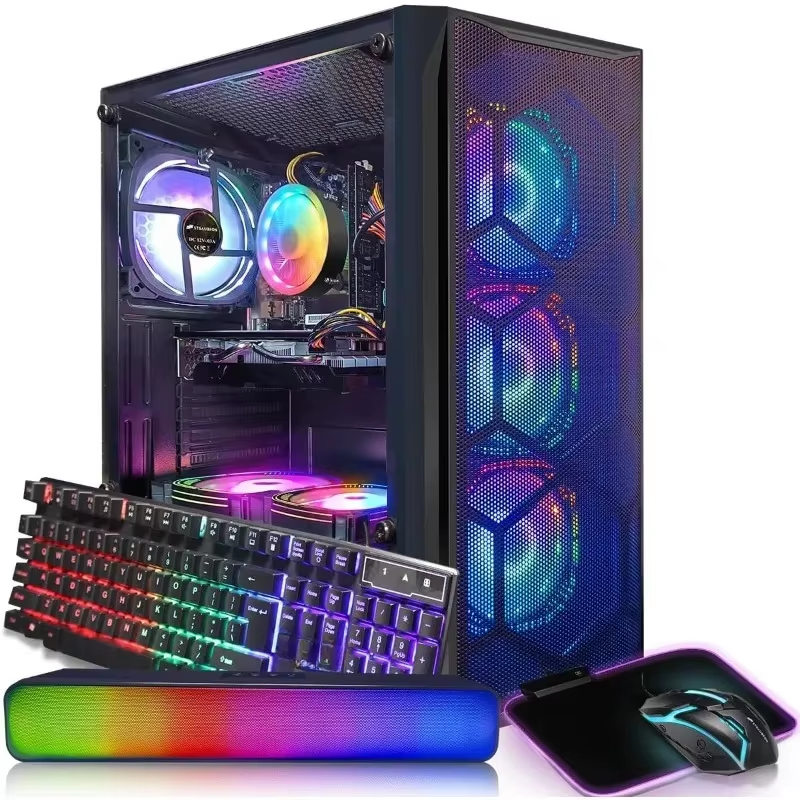
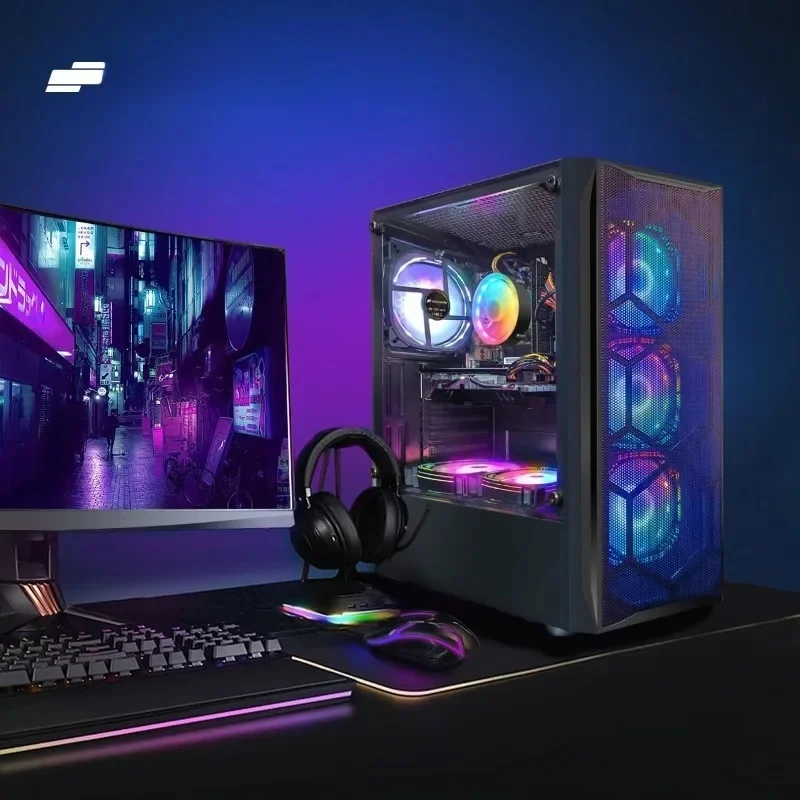
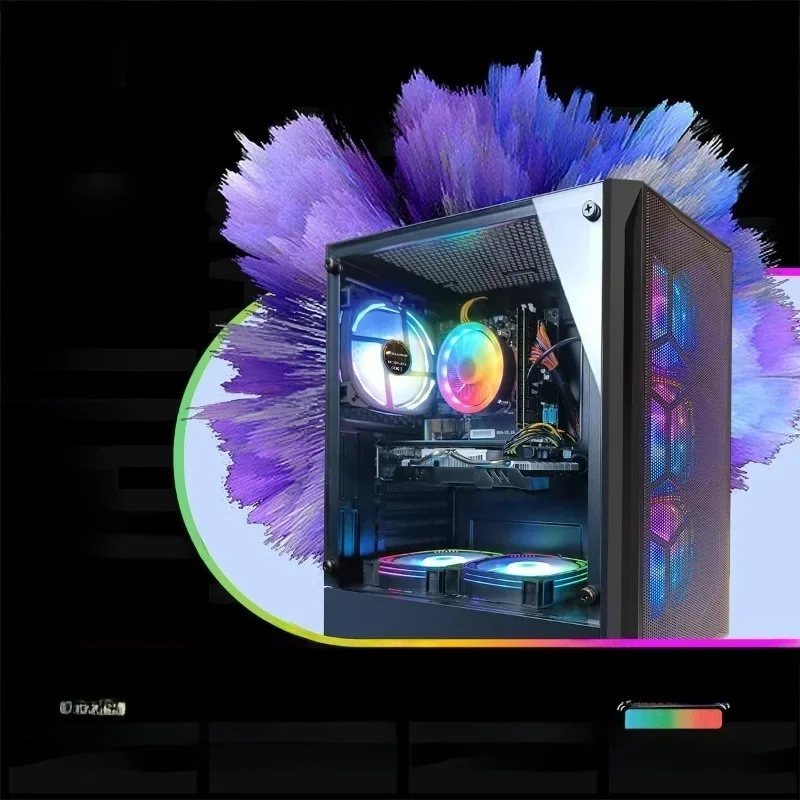
- RGB Lighting: Adds aesthetic flair, though the exact implementation (case fans, CPU cooler, GPU) isn’t detailed.
The case likely supports future upgrades, such as adding a more powerful GPU, extra storage, or RAM. However, users should verify PSU wattage (not specified) before upgrading power-hungry components.
Design and Aesthetics
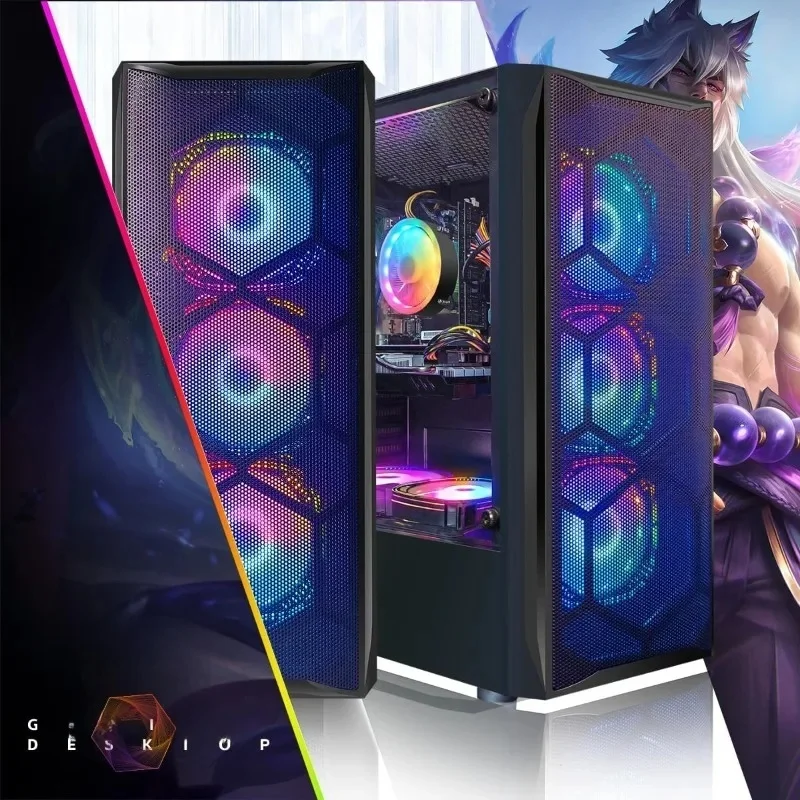
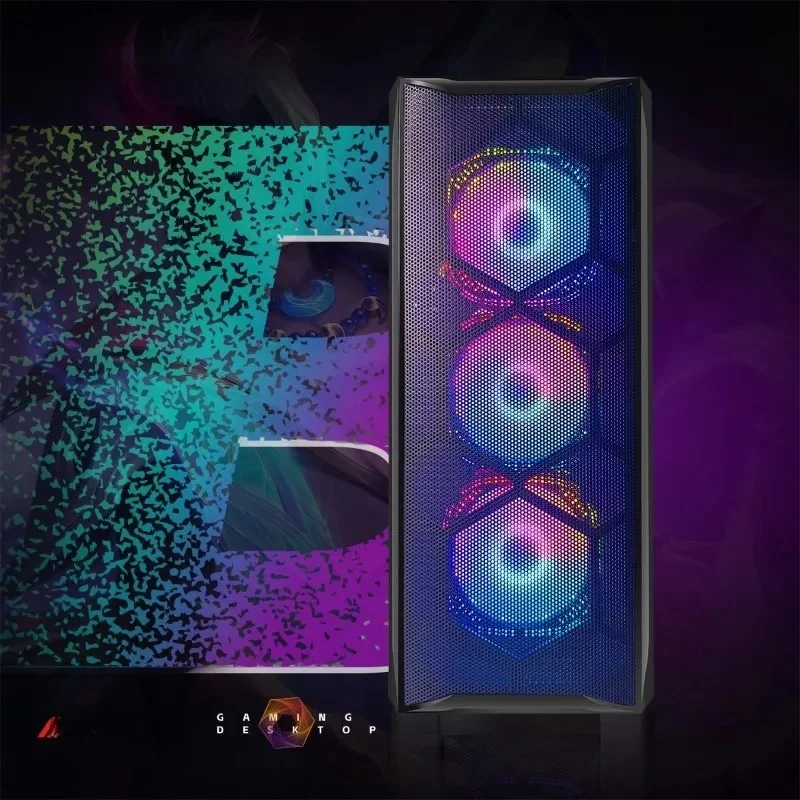
While the product description lacks specifics about the chassis, the mention of RGB lighting suggests gamer-centric styling—likely tempered glass panels, LED fans, or accentuated accents. Prebuilt PCs in this range often prioritize airflow with mesh front panels, but thermals and noise levels would depend on the exact cooling solution.
Who Is This PC For?
This Gaming PC Desktop Computer caters to three primary audiences:
- Budget-Conscious Gamers: Seeking reliable 1080p performance without overspending.
- Hybrid Users: Balancing gaming with work, school, or content creation.
- Upgrade-Oriented Buyers: Using this as a foundation for future GPU or storage upgrades.
It’s less ideal for users targeting 1440p/4K gaming or maxed-out settings in cutting-edge titles, where the RX 580’s limitations become apparent.
Final Verdict: A Capable Midrange Performer
The Gaming PC Desktop Computer (Core i7 + RX 580) strikes a practical balance between price and performance. Its strengths—a robust Core i7 CPU, ample RAM, fast SSD, and modern WiFi/Bluetooth—outweigh its storage limitations and aging GPU for 1080p-focused gamers. While enthusiasts might balk at the RX 580 in 2024, it remains a viable 60 FPS workhorse for the majority of titles when settings are optimized.
Pros:
- Strong multitasking with Core i7 and 16GB RAM.
- Smooth 1080p gaming at medium-high settings.
- Fast boot/load times thanks to 512GB SSD.
- Future-resistant connectivity (WiFi, Bluetooth 5.0).
- RGB adds visual customization.
Cons:
- RX 580 struggles with newer AAA games at max settings.
- 512GB SSD fills quickly with modern game sizes.
- PSU limitations (if any) could hinder upgrades.
In summary, this desktop offers a cost-effective gateway into PC gaming with room to grow. It’s a compelling option for those prioritizing value over bleeding-edge performance—proof that smart component pairing can still deliver satisfying experiences without breaking the bank.