Price:
(as of $2,364.41 – Details)

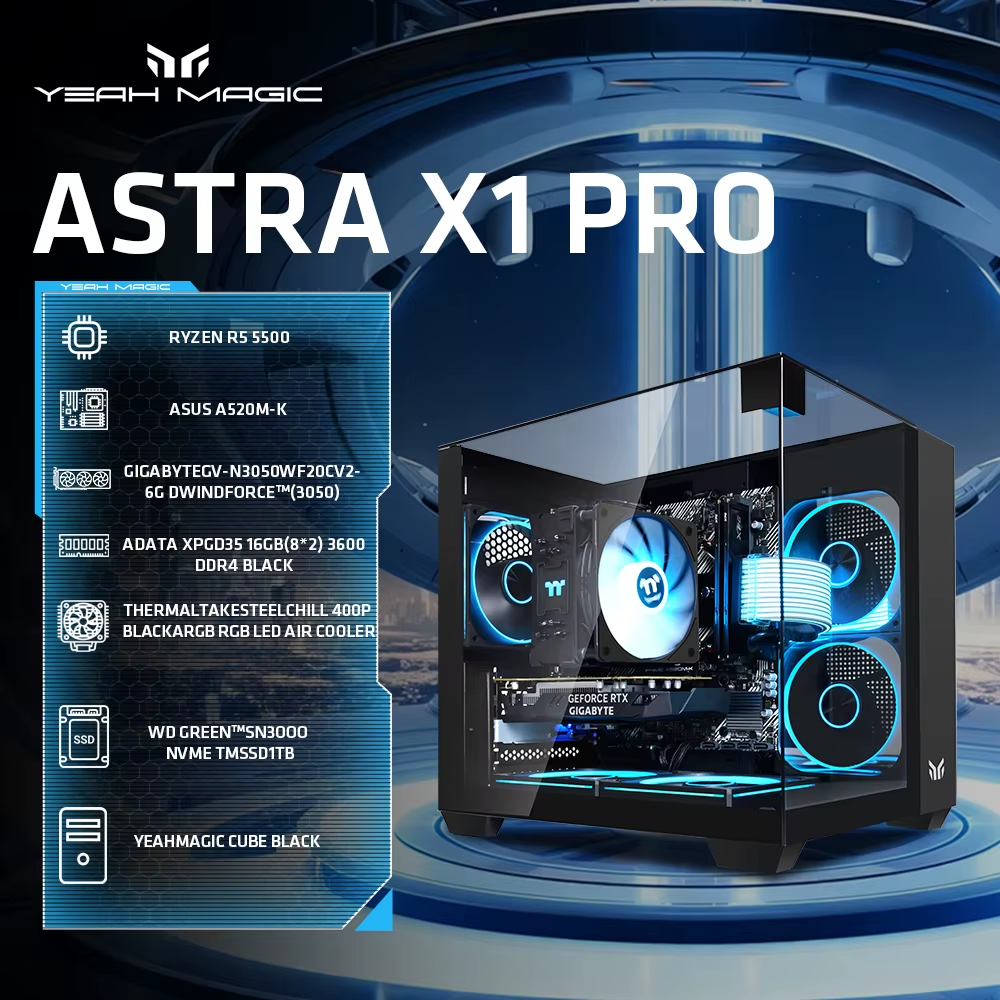
YEAH MAGIC AMD Ryzen 5 5500 Gaming Desktop: A Balanced Powerhouse for 1080p Domination
The gaming PC market is saturated with options, but finding a prebuilt system that balances performance, value, and modern features can feel like navigating a maze. Enter the YEAH MAGIC AMD Ryzen 5 5500 Gaming Desktop—a machine engineered to deliver reliable 1080p gaming and multitasking prowess without breaking the bank. Designed for entry-to-mid-level gamers, students, and content creators, this desktop combines AMD’s efficient processing and NVIDIA’s accessible ray-tracing architecture. Let’s dissect its specifications and intended performance to determine whether it lives up to its promise of being a streamlined gateway into PC gaming.
Core Specifications at a Glance
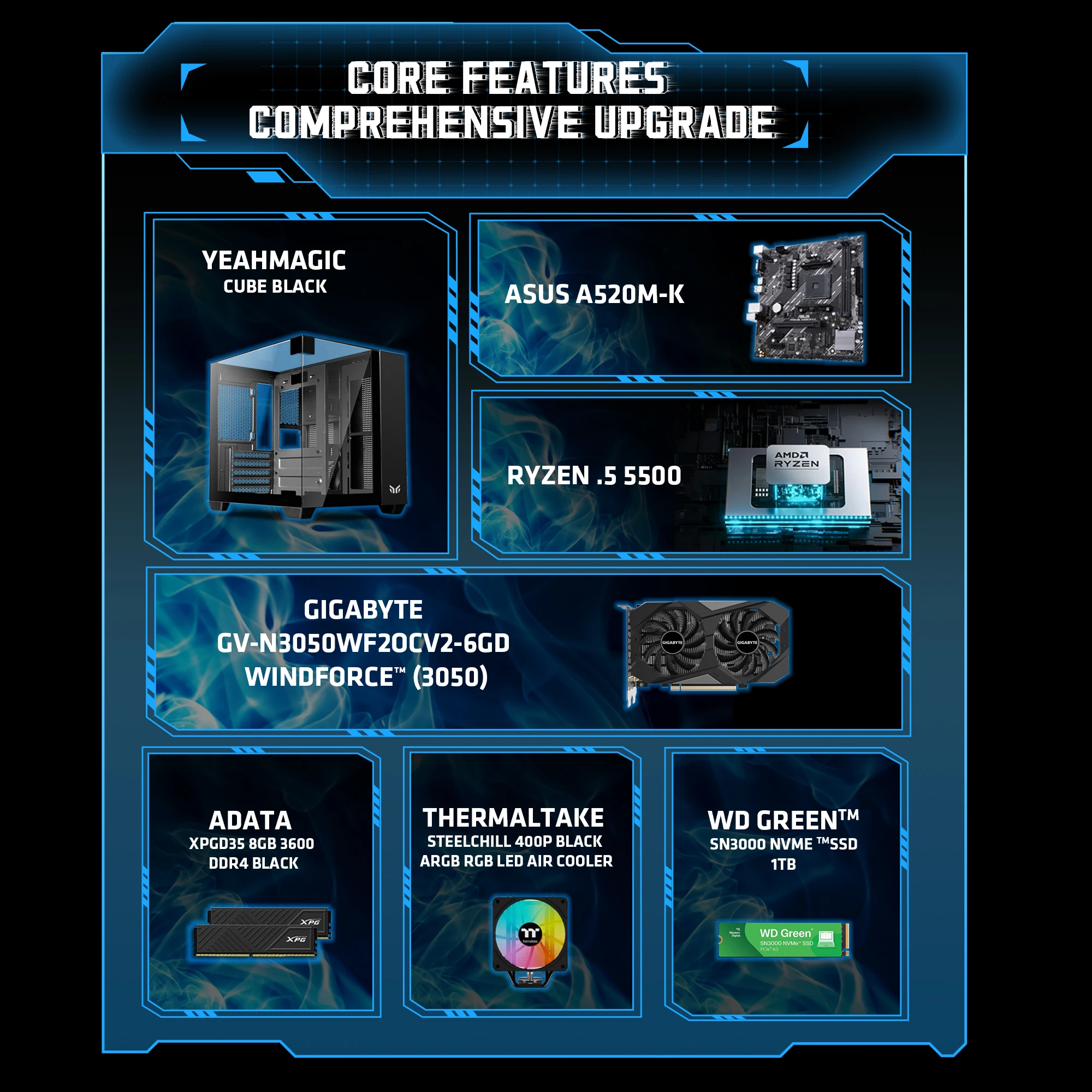
Before diving into performance expectations, here’s a breakdown of its hardware:
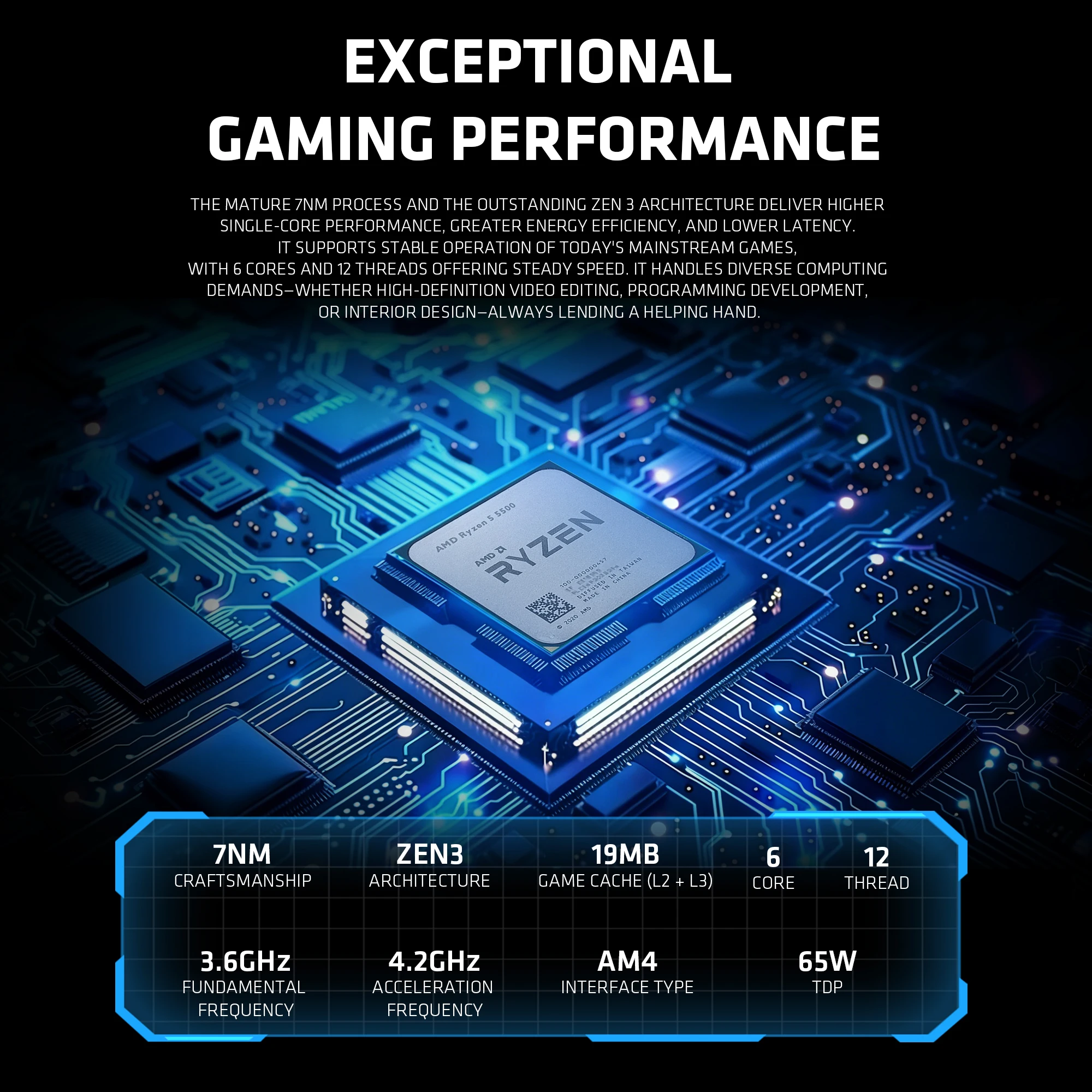
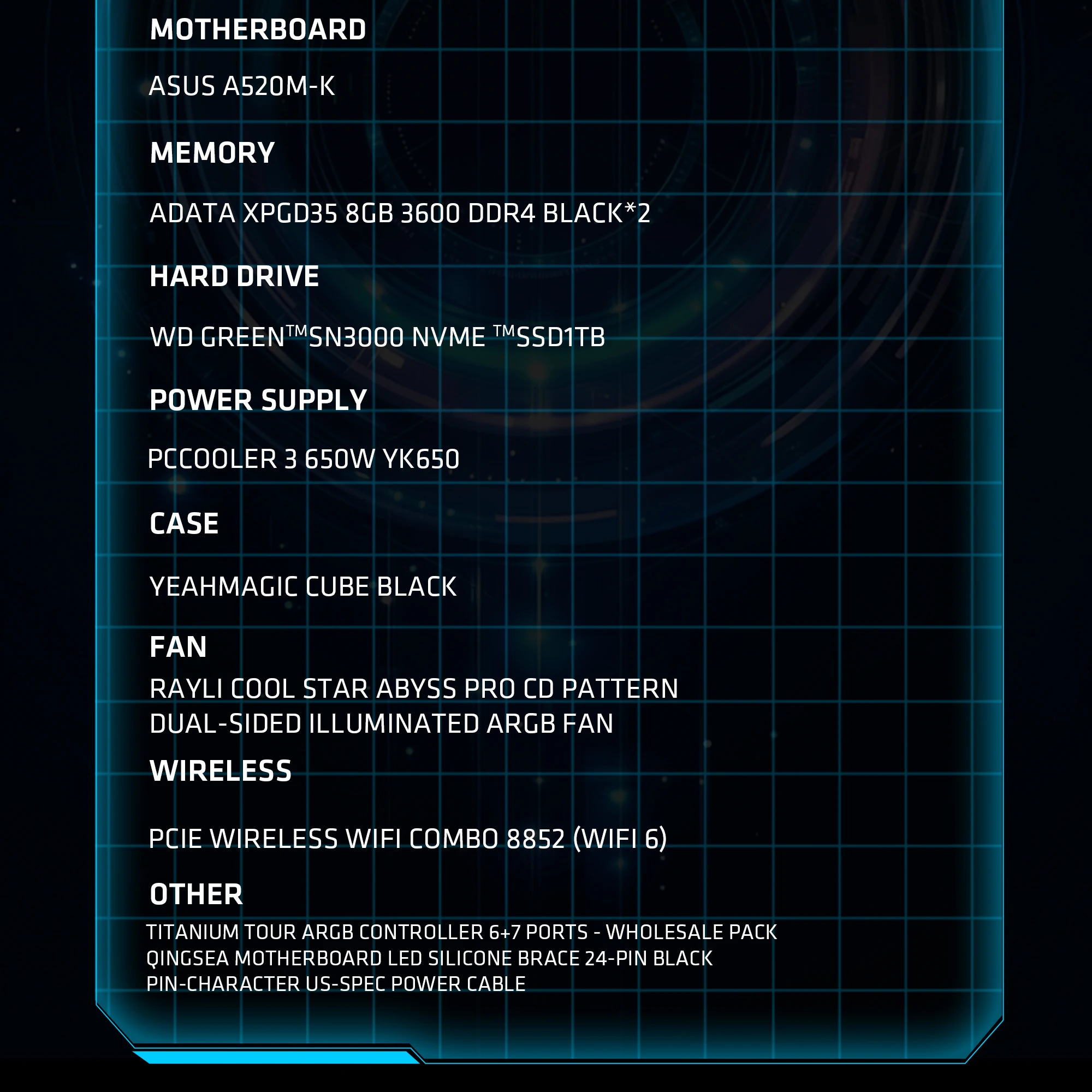
- Processor: AMD Ryzen 5 5500 (6 cores, 12 threads, base clock 3.6GHz, max boost 4.2GHz)
- Graphics: NVIDIA GeForce RTX 3050
- Memory: 16GB DDR4 RAM (2x8GB dual-channel, 3600MHz)
- Storage: 1TB NVMe SSD
- OS: Windows 11 Home (64-bit)
- Connectivity: Assumed Wi-Fi 5/6 and Gigabit Ethernet (exact specs not detailed)
Processing Muscle: AMD Ryzen 5 5500
At the heart of this system lies the AMD Ryzen 5 5500, a 6-core, 12-thread CPU built on Zen 3 architecture. Though not the latest Ryzen 7000-series, this chip remains a competent workhorse for gaming and productivity. With a base clock of 3.6GHz and a max boost of 4.2GHz, it efficiently handles modern titles like Fortnite, Apex Legends, or Elden Ring without bottlenecking the GPU. Its 19MB cache (L2+L3) ensures smoother multitasking, allowing users to stream, browse, or run productivity apps alongside gaming sessions.
Key Advantages:
- Multithreaded Performance: The 12 threads excel in CPU-heavy games and software like Blender or Adobe Premiere.
- Power Efficiency: A 65W TDP means less heat generation and quieter cooling.
- PCIe Gen 3 Support: While not the latest Gen 4, this still delivers ample bandwidth for the RTX 3050 and NVMe SSD.
Limitations: Competitive gamers targeting 144Hz+ in esports titles might prefer a Ryzen 7 or Intel i5 for higher minimum frame rates.
Graphics Prowess: NVIDIA GeForce RTX 3050
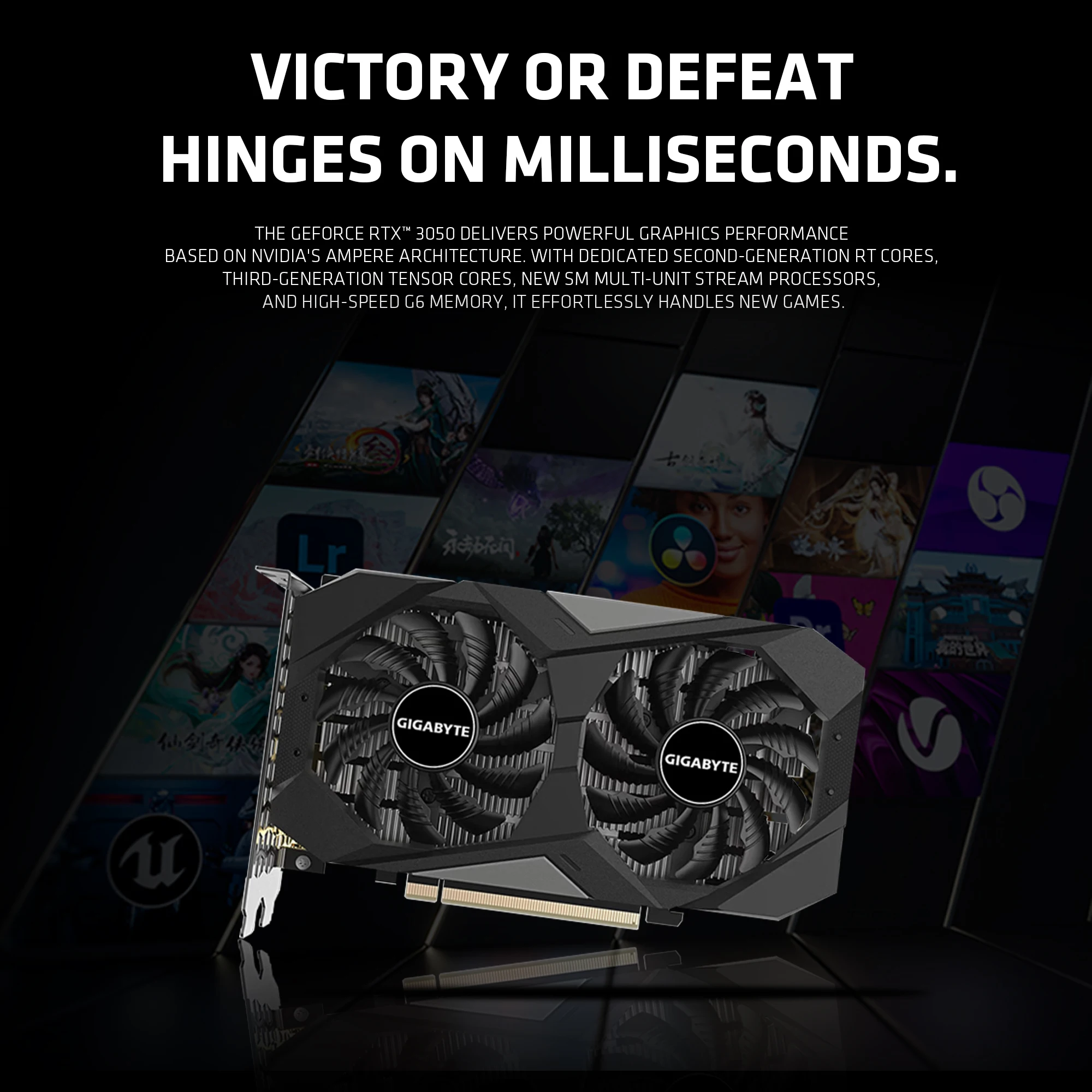
The RTX 3050 is NVIDIA’s entry-level Ampere GPU, offering 8GB of GDDR6 memory and support for ray tracing and DLSS (Deep Learning Super Sampling). In 1080p gaming, this card balances detail and frame rates:
- AAA Titles: Expect 60–75 FPS at high settings in games like Cyberpunk 2077 (with DLSS enabled) or Horizon Zero Dawn.
- Esports Dominance: Easily surpasses 144 FPS in Valorant, CS2, or Rocket League at ultra settings.
- Ray Tracing: Light ray tracing is feasible in supported titles (Minecraft RTX, Control) but may require DLSS to maintain playable FPS.
DLSS – The Game-Changer: DLSS leverages AI to upscale lower-resolution images, boosting performance without sacrificing visual fidelity—a critical advantage for the 3050.
Memory and Storage: Speed Meets Capacity
The 16GB DDR4 RAM (3600MHz) ensures smooth multitasking. Dual-channel mode (2x8GB) maximizes bandwidth, reducing stutters in memory-intensive scenarios—ideal for gamers who frequently alt-tab or content creators juggling Photoshop and Premiere.
Storage is a highlight: the 1TB NVMe SSD offers lightning-fast boot times (Windows 11 in seconds), near-instant game loads (Warzone, Red Dead Redemption 2), and ample space for 10–15 AAA titles. NVMe’s direct PCIe interface outclasses SATA SSDs, making file transfers and system responsiveness a breeze.
Operating System: Windows 11 Home
Preloaded with Windows 11 Home, the system is ready for immediate use. Key gamer-friendly features include:
- DirectStorage: Reduces game load times by bypassing the CPU (requires developer implementation).
- Auto HDR: Enhances color depth in supported games without manual tweaking.
- Xbox Game Pass Integration: Seamless access to Microsoft’s subscription library.
Design and Expandability
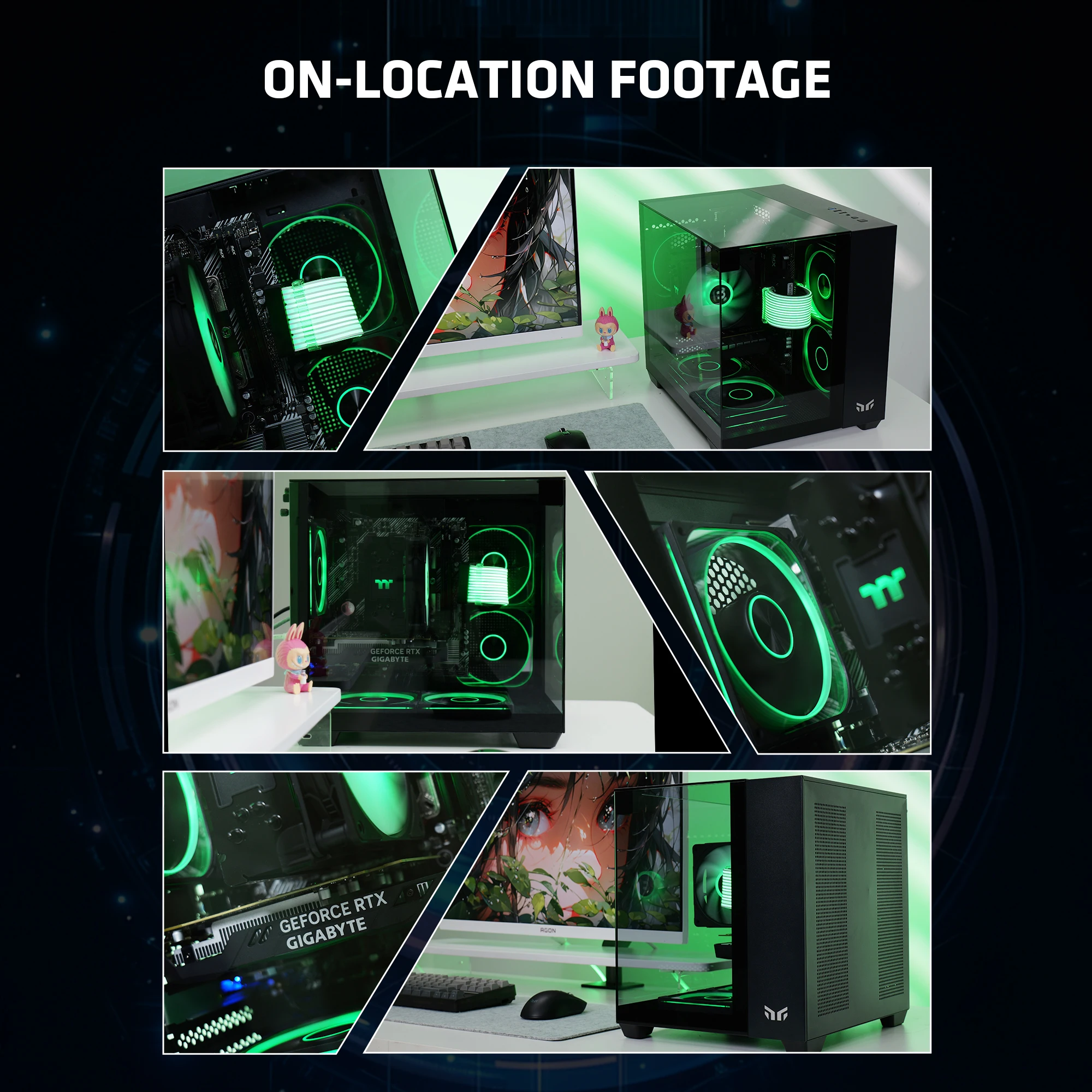
While the chassis design isn’t detailed, prebuilts like this often prioritize function over flair. Expect a minimalistic black tower with adequate ventilation and front-panel ports (USB-A, USB-C, audio).
Upgrade Potential:
- Storage: Additional SATA bays or M.2 slots may be available for HDD/SSD expansions.
- RAM: 16GB is sufficient for now, but the dual-channel setup allows easy upgrades to 32GB.
- GPU/CPU: The 5500 supports higher-end GPUs (RTX 4060, RX 7600) but check PSU wattage limits.
Connectivity and Extras
Assuming standard connectivity:
- Wi-Fi: Likely Wi-Fi 5 or 6 for wireless flexibility.
- Ethernet: Gigabit port for lag-free online gaming.
- Ports: Multiple USB 3.x ports, HDMI/DisplayPort for multi-monitor setups, and audio jacks.
Performance Summary: Who Is This For?
Ideal Users:
- 1080p Gamers: High-ultra settings at 60–100 FPS in most titles.
- Budget-Conscious Creators: Handles 1080p video editing and light 3D rendering.
- Students & Professionals: Snappy performance for coding, streaming, or office tasks.
Limitations to Note:
- Ray Tracing: Manage expectations—this is an entry-level RTX card.
- 1440p Gaming: Possible with reduced settings but not optimal.
- CPU-Intensive Workloads: Video editors may encounter longer render times than with Ryzen 7/9.
Conclusion: A Calculated Compromise
The YEAH MAGIC AMD Ryzen 5 5500 Gaming Desktop isn’t built to max-out Cyberpunk 2077 at 4K or dominate Twitch leaderboards. Instead, it carves a niche as a pragmatic, no-fuss entry into PC gaming, blending AMD’s multitasking efficiency with NVIDIA’s feature-rich graphics. The 16GB RAM and 1TB NVMe SSD eliminate immediate upgrade needs, while Windows 11 future-proofs the software experience.
For under $800 (estimated price bracket), this system sidesteps the pitfalls of cheaper prebuilts—mechanical hard drives, single-channel RAM, or outdated GPUs—and delivers a coherent, gamer-ready package. If your goals involve crisp 1080p gameplay, rapid load times, and the flexibility to dabble in streaming or creative work, the YEAH MAGIC Desktop is a compelling contender in the crowded budget arena.